news
A4 Gloves Explained: Cut Level, Materials, Fit, and Best Uses
Quick Answer: A4 is a cut-resistance level in the ANSI/ISEA 105 scale, covering a cutting force of roughly 1,500-2,199 grams - medium-duty protection for metal fabrication, glass handling, and food processing. It is not the same as the A-F letters used by EN 388, which is a different test method, so the two cannot be converted directly. A4 gloves typically combine an HPPE or aramid liner with a nitrile, PU, or sandy coating; the coating decides grip and chemical resistance, while the liner decides cut level. Match the level to the task, confirm which standard your market requires, and replace gloves once the coating wears through or the liner feels cut.

In industrial settings, A4 gloves play a vital role in preventing injuries. They are designed to reduce a specific, well-defined hazard: cuts from straight blades. Industry data consistently points to the same root cause: most reported hand injuries happen where no glove was being worn. Estimates in the same body of reporting place the annual number of emergency-department visits for hand injuries in the hundreds of thousands to one million, a large share of which are considered preventable with suitable hand protection. Investing in A4 gloves not only enhances safety but also boosts productivity by keeping workers protected and focused on their tasks.
Key Takeaways
- A4 gloves significantly reduce the risk of hand injuries in industrial settings, protecting workers from common hazards.
- Investing in A4 gloves enhances productivity by keeping workers safe and focused, minimizing disruptions caused by injuries.
- A4 gloves feature advanced materials that provide superior durability, grip, and comfort, making them ideal for various tasks.
- Choosing A4 gloves can lead to long-term cost savings by reducing injury-related expenses and the need for frequent replacements.
- Compliance with safety standards is crucial; A4 gloves help businesses meet regulations while ensuring worker safety.
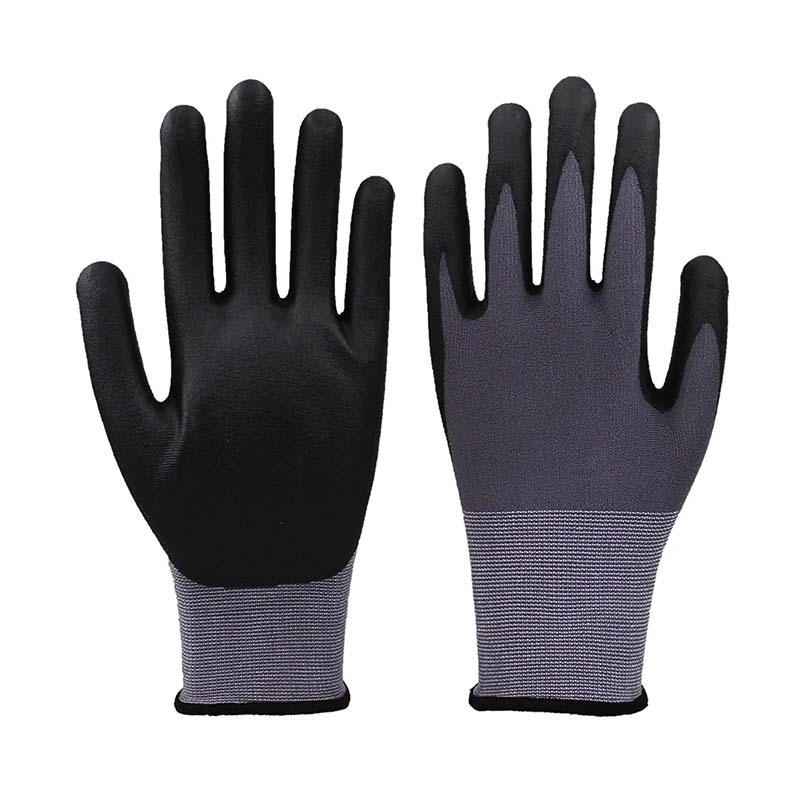
S1173NTS Nitrile Coated Nylon Gloves
- 15-gauge nylon-spandex liner with foam nitrile palm coating
- Touch-screen compatible fingertips for handheld scanners
- Silicone-free option for painting and electronics assembly
Risks of Inadequate Hand Protection

In many industrial environments, workers face numerous hazards that can lead to serious hand injuries. Without proper hand protection, they expose themselves to risks that can have lasting consequences.
Common Workplace Hazards
Here are some of the most common types of hazards that threaten hand safety:
| Type of Hand Injury | Percentage | Common Causes | Severity Range |
|---|---|---|---|
| Lacerations | 63% | Cutting tools, power tools, sharp edges | Superficial cuts to severe damage requiring surgery |
| Crush Injuries | 13% | High-pressure machines, heavy tools | Fractured bones, nerve damage, soft tissue damage |
| Punctures | 6% | Sharp tools, loose wires, nails | Deep tissue damage, risk of infection |
These statistics highlight the importance of wearing protective gear like A4 gloves. Each type of injury can result from everyday tasks, making it crucial for workers to stay vigilant.
Consequences of Hand Injuries
The impact of hand injuries goes beyond just physical harm. They can disrupt entire operations and lead to significant financial losses. For instance, in a high-volume manufacturing facility, the absence of a key worker due to a hand injury can severely disrupt operations, especially with the current labor shortages. Ensuring the health of staff is crucial to maintaining productivity.
Here are some consequences that businesses may face due to hand injuries:
- Work stoppages and task reassignments
- Investigation time and reduced focus
- Delays in project timelines and missed production targets
- Increased operational disruptions affecting downstream processes
- Reputational damage and legal fees
- Increased insurance premiums and training costs
Hand injuries lead to immediate productivity losses as work is halted, and tasks are reassigned. This not only affects the injured worker but also disrupts the workflow of the entire team, causing delays and operational inefficiencies.
In construction and food processing, the exposure is higher still. For example, the construction industry reports a hand injury rate of 29.6%, while food processing sees 14% of days-away cases due to similar injuries. These figures underscore the need for effective hand protection solutions, such as A4 gloves, to mitigate risks and enhance safety.
If you are choosing a level for the first time, our explainer on how cut-resistant gloves are tested (A1-A9) covers the test methods behind these numbers.
Table of Contents
- Why Hand Protection Matters
- Risks of Inadequate Hand Protection
- Advantages of A4 Gloves
- A4 vs EN 388: Two Rating Systems
- Comparing A4 Gloves to Older Models
- Comfort and Fit in A4 Gloves
- How Long Should a Cut-Resistant Glove Last?
- Choosing the Right Level for the Task
- A Note on Safety and Standards
Advantages of A4 Gloves

A4 gloves offer numerous advantages that make them a top choice for hand protection in various industrial settings. Their design focuses on durability and functionality, ensuring workers can perform tasks safely and efficiently.
Enhanced Durability
One of the standout features of A4 gloves is their enhanced durability. These gloves are made from advanced materials that provide superior protection compared to standard options. Here’s a quick look at some of the materials that contribute to their strength:
| Material | Description |
|---|---|
| TPR | Provides impact resistance and flexibility. |
| HPPE | Offers high cut resistance and durability. |
| Glass Fiber | Enhances strength and abrasion resistance. |
| Nitrile Sandy | Ensures grip and chemical resistance. |
These materials work together to create gloves that can withstand the rigors of daily use in demanding environments. For example, the HPPE (High-Performance Polyethylene) offers excellent cut resistance, making A4 gloves suitable for tasks involving sharp tools or materials.
Laboratory tests measure the cut and abrasion resistance of A4 gloves, ensuring they meet safety standards. The following table illustrates the cut resistance levels:
| Cut Resistance Level | Weight Range (grams) | Application |
|---|---|---|
| A4 | 1500-2199 | Medium cut hazards, including metal fabrication and food processing |
For tasks that combine sustained edge contact with moderate force, that level is the practical starting point.
Superior Grip and Dexterity
Another significant advantage of A4 gloves is their superior grip and dexterity. Workers often need to handle small or slippery objects, and A4 gloves excel in this area. Here are some features that enhance grip and dexterity:
| Feature | Benefit |
|---|---|
| High Visibility Yellow Polyurethane Palm Coating | Provides a tacky, controlled grip, enhancing handling safety on slippery or small parts. |
| Lightweight Design | Ensures ease of movement, allowing for excellent dexterity during tasks that require precision. |
| CE/EN 388: 4543 Cut Protection Rating | Offers high cut resistance while maintaining flexibility, crucial for handling sharp objects. |
These features make A4 gloves an ideal choice for various applications, from automotive work to food processing. The lightweight design allows workers to maintain their natural hand movements, which is essential for tasks requiring precision and control.
A4 vs EN 388: Two Rating Systems
Most confusion around "A4" comes from mixing two standards that measure cut resistance in different ways. Use this table to keep them apart before you compare quotations.
| Standard | Cut scale | How it is measured | Where it is used |
|---|---|---|---|
| ANSI/ISEA 105 | A1-A9 | Cutting force in grams on a straight blade (A4 = 1,500-2,199 g) | North America |
| EN 388:2016 | A-F (plus a 4-digit abrasion/cut/tear/puncture code) | Coupe test on a rotating circular blade, with ISO 13997 used for higher levels | European Union and markets aligned to it |
Two practical consequences follow. First, an A4 glove is not automatically "level 4" in EN 388 and vice versa - the numbers come from different machines. Second, a supplier should be able to quote both ratings for the same product, because many gloves are tested to both standards. If a data sheet shows only one number, ask which standard produced it before comparing against another brand.
This matters most when a glove is specified for one market and bought in another. A glove chosen as A4 for a US site may need an EN 388 declaration to be accepted at a European sister plant, and the equivalent performance band is usually one to two EN 388 letters lower than the ANSI level.
Comparing A4 Gloves to Older Models
When it comes to hand protection, A4 gloves stand out from older models due to significant technological advancements. These innovations not only enhance safety but also improve comfort and usability for workers.
Technological Advancements
A4 gloves feature cutting-edge materials and designs that set them apart. Here’s a quick look at some of the advancements:
| Advancement Type | Description |
|---|---|
| Innovative Liner & Coating | A4 gloves use advanced liner and coating technologies for enhanced performance. |
| Graphene Incorporation | The use of graphene in construction provides superior strength and flexibility. |
These advancements mean that A4 gloves offer better protection against cuts and abrasions while remaining lightweight and flexible. Workers can enjoy improved dexterity, allowing them to handle tools and materials with ease.
Cost-Effectiveness Over Time
Investing in A4 gloves proves to be a smart financial decision for businesses. While the initial cost may be higher than older models, the long-term benefits outweigh the expense. Here’s why:
- Durability: A4 gloves last longer than traditional gloves, reducing the need for frequent replacements.
- Increased Productivity: With better grip and comfort, workers can perform tasks more efficiently, leading to higher output.
- Reduced Injury Costs: Fewer injuries mean lower medical expenses and less downtime, saving companies money in the long run.
By choosing A4 gloves, businesses not only protect their workers but also enhance their bottom line. The combination of advanced technology and cost-effectiveness makes A4 gloves a wise choice for any industry.

S0627 A6 Anti-Cut Aramid Arm Sleeve
- ANSI A6 aramid blend sleeve for forearm protection
- Heat resistant, with thumb slot for a secure fit
- Pairs with A4 gloves to extend coverage past the wrist
Comfort and Fit in A4 Gloves
When it comes to hand protection, comfort and fit are just as important as safety. A4 gloves are designed with ergonomic features that cater to the needs of workers who wear them for extended periods.
Ergonomic Design
The ergonomic design of A4 gloves ensures they fit snugly without restricting movement. This design helps reduce fatigue, allowing workers to stay focused on their tasks. Key features include:
- Contoured Shape: A4 gloves mold to the natural shape of the hand, providing a comfortable fit.
- Elastic Cuffs: These cuffs keep dirt and debris out while ensuring a secure fit.
- Lightweight Materials: The use of lightweight materials minimizes strain on the hands during prolonged use.
In practice, comfort comes down to three design details: a contoured liner, an elastic cuff, and a light enough gauge that the hand does not fatigue over a full shift.
Breathability and Flexibility
Breathability and flexibility are crucial for maintaining comfort during long shifts. A4 gloves incorporate advanced materials and construction techniques that enhance these qualities. Here’s a look at how they achieve this:
| Material/Technique | Contribution to Breathability and Flexibility |
|---|---|
| Nitrile Foam Coating | Provides superior grip and enhances dexterity and ventilation. |
| Palm-Dipped Design | Improves dexterity and allows for better airflow. |
| Flexible PVC Impact Pods | Increases flexibility while providing impact protection. |
| 13-Gauge Seamless Liner | Offers a breathable and ergonomic fit for comfort. |
| TPR, HPPE, Glass Fiber | Contributes to durability while maintaining flexibility and comfort. |
These features ensure that A4 gloves remain comfortable even in hot or humid conditions. For instance, the water-based PU coating wicks away sweat and allows airflow, keeping hands dry and cool.
How Long Should a Cut-Resistant Glove Last?
Gloves fail gradually, and the visible wear is rarely where the cut risk is. Three signs mean it is time to replace, regardless of how the glove looks overall.
- Coating breakthrough. When the palm coating is worn through and the liner shows, both grip and chemical resistance have gone - even if the liner still feels intact.
- Cut or nick marks on the liner. A cut strand means the structure that provides the rating has already been compromised locally.
- Stiffness or stretching. A liner that has lost its elasticity fits loosely, and a loose glove is more likely to be caught by moving parts.
Laundering or degreasing affects lifespan as much as abrasion does: repeated high-temperature drying embrittles HPPE and glass-fibre blends. Track replacement by task and by week rather than by appearance, and keep a few spare pairs at the workstation so nobody keeps using a glove past its service life.
Fit decides whether a glove is actually worn. Our step-by-step guide to fitting safety work gloves properly walks through measuring and checking the fit.
A Note on Safety and Standards
Cut, heat, and chemical ratings are the results of controlled laboratory tests. They describe how a glove performed under a specific test method - they do not predict what will happen in a particular workplace. Any glove programme should start from a task-level risk assessment, be checked against the PPE rules that apply in your market, and be reviewed whenever the task, the material, or the tooling changes.
This article is general information for buyers and safety teams and is not a substitute for a formal risk assessment or for the advice of a qualified safety professional.
Sources and References
- ISEA (International Safety Equipment Association) - publishes the ANSI/ISEA 105 hand protection standard used for the A1-A9 cut scale.
- CEN-CENELEC - the European standardisation body behind EN 388 protective glove testing.
Choosing the Right Level for the Task
The grade should follow the hazard, not the other way round. A simple way to place A4 in context:
| Typical task | Sensible level | Why |
|---|---|---|
| General assembly, packaging, light warehouse work | A1-A2 | Contact with edges is incidental rather than sustained |
| Handling cut sheet, glass panes, metal profiles | A3-A4 | Sustained edge contact with moderate force |
| Stamping, slitting, handling sharp scrap | A5-A6 | High-force, unpredictable edge contact |
| Meat and poultry processing, blade changeovers | A4-A6 | Wet, slippery blades accelerate the risk of slip-cut injuries |
| Heavy fabrication with powered saws | A7-A9 | Extreme cut force; often combined with impact protection |
Level is only one input. Grip, coating type, and fit usually decide whether workers actually keep the gloves on - and a glove that is taken off offers no protection at all.
To compare grades across the range, browse the cut resistant gloves collection.
The Role of SIZA in Hand Protection
SIZA plays a crucial role in setting industry standards for hand protection. Their commitment to quality assurance ensures that gloves like the Nitrile Coated Polyester Gloves GN3207 meet rigorous safety requirements. These gloves undergo extensive testing to guarantee they provide the necessary protection for workers in various environments.
Here’s a quick look at the standards SIZA adheres to:
| Standard | Description |
|---|---|
| EN 388 | Tests resistance to abrasion, blade cut, tear, and puncture; rated from A to F for cut resistance. |
| ANSI/ISEA 105 | Uses a different test method for cut resistance, rated from A1 to A9. |
These standards help ensure that SIZA gloves deliver reliable protection, allowing workers to perform their tasks safely.
Quality Assurance with Nitrile Coated Polyester Gloves GN3207
The GN3207 gloves are designed for a wide range of industrial tasks. They offer excellent liquid resistance and a secure grip, making them ideal for automotive, maintenance, and material handling applications. Workers appreciate their durability and comfort, which enhance productivity on the job.
SIZA's focus on quality means that these gloves are not just about meeting standards; they also prioritize user experience. The elastic cuff ensures a snug fit, while the nitrile coating provides a reliable grip, even in messy conditions. This combination of features makes the GN3207 a practical choice for professionals who need dependable hand protection.
Customizable Solutions for Various Industries
SIZA understands that different industries have unique requirements when it comes to hand protection. They offer customizable solutions tailored to specific needs. Here are some key points about their approach:
- Different industries have unique cut hazards that necessitate specific protection levels.
- Manufacturing, construction, food processing, and automotive industries each require tailored glove solutions based on the materials and potential injury severity.
For instance, A4 gloves have a cutting force resistance of 1,500-2,199 grams, making them suitable for medium-duty assembly tasks in various sectors. This adaptability ensures that workers receive the right level of protection for their specific tasks, enhancing safety and efficiency.
By focusing on quality and customization, SIZA continues to lead the way in hand protection solutions, ensuring that workers can perform their jobs safely and effectively.
A4 gloves are essential for ensuring hand safety in industrial environments. They are designed for medium-heavy applications, making them suitable for high-risk areas like glass manufacturing and metal fabrication. Upgrading to A4 gloves can significantly reduce injury risks. Studies show that these gloves enhance protection against sharp edges and unexpected forces, which helps keep workers safe.
Investing in quality hand protection is a proactive step towards workplace safety. Here are some long-term benefits of choosing A4 gloves:
- Reduced injury rates
- Improved work accuracy and grip control
- Increased worker confidence and satisfaction
- Extended glove lifespan and fewer replacements
With regulations tightening globally, industries must meet higher safety standards. Choosing A4 gloves not only protects workers but also supports compliance with these standards.
0users like this.