
news
How Cut Resistant Gloves Are Tested: Understanding Cut Levels A1-A9
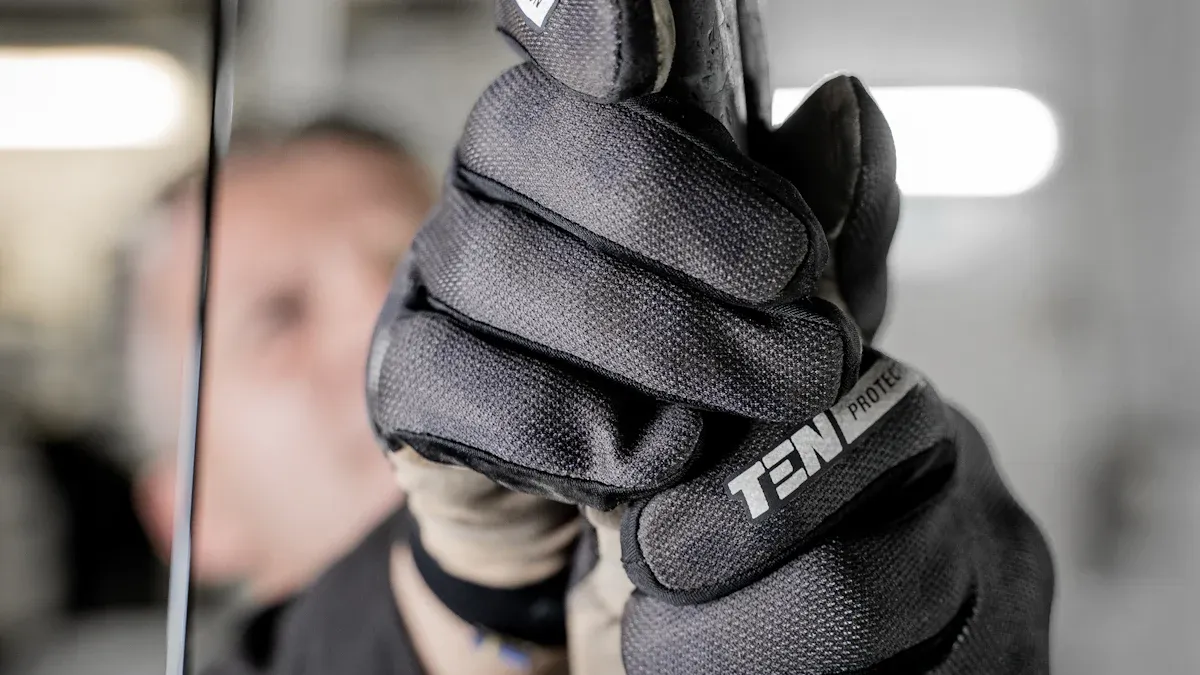
Cut resistant gloves undergo rigorous testing to ensure they provide the necessary protection. The testing process often involves a machine that measures how much force is needed to cut through the glove material. This helps determine the glove's cut resistance level.
Cut levels range from A1 to A9, with A1 representing the lowest level of protection and A9 the highest. For example, A1 gloves are suitable for light tasks, while A9 gloves are designed for heavy-duty applications. With over 120,000 hand injuries occurring in 2019, understanding these levels is crucial for safety in the workplace.
Quick Answer: Cut resistant gloves are rated by how much force a blade needs to cut through the material, measured with standardised machines and test methods. ANSI/ISEA 105 grades the result from A1 to A9, where A1 offers the least cut resistance and A9 the most. EN 388 uses a different scale and a different test method, so the two numbers are not directly interchangeable. The level you need depends on the blade type, the force involved, and how long the exposure lasts, not on the highest number available. The sections below explain how the tests work and how to match a level to the actual job.
In This Guide
- Overview of cut resistance testing
- Testing equipment and procedures
- International standards behind the ratings
- Cut levels A1 to A9 explained
- A1 to A9 at a glance
- How ANSI levels compare with EN 388
- Choosing the right cut level for a task
- A note on safety and standards
Remember, choosing the right cut level can significantly reduce the risk of injury!
Key Takeaways
- Cut resistant gloves are tested using machines that measure how much force is needed to cut through the material, determining their cut resistance level.
- Cut levels range from A1 to A9, with A1 for light tasks and A9 for heavy-duty applications, helping users select the right gloves for their specific needs.
- Choosing the correct cut level significantly reduces the risk of hand injuries, which can lead to serious consequences and high medical costs.
- Understanding the factors that affect cut resistance, such as material properties and glove construction, aids in selecting the best gloves for various tasks.
- Employers benefit from investing in quality cut resistant gloves, as they can lower injury rates, improve workplace morale, and reduce costs associated with accidents.
Overview of Cut Resistance Testing

Cut resistance testing is essential for ensuring that cut resistant gloves provide adequate protection. This testing involves several steps and specific equipment to measure how well a glove can withstand cuts.
Testing Equipment
Various machines and tools are used in cut resistance testing. Here are some key pieces of equipment:
- Calibrated machines: These machines ensure accurate measurements during testing.
- Tomodynomometer (TDM 100): This device is commonly used for standardized testing.
During the testing process, a sharpened blade is dragged across a fabric sample under controlled pressure. The amount of pressure required to cut through the fabric determines the glove's cut level.
Testing Procedures
Certified laboratories follow specific procedures to ensure reliable results. Here’s a typical sequence of steps:
| Step | Description |
|---|---|
| 1 | Prepare specimens according to standards and condition them in a controlled environment. |
| 2 | Cut specimens to specific dimensions for testing. |
| 3 | Place specimens in a shear test machine and apply specified forces. |
| 4 | Record the cutting time and force to evaluate cut resistance. |
| 5 | Report the results based on the data collected. |
International Standards
Cut resistance testing adheres to international standards to ensure consistency and reliability. Here are two main standards:
| Standard | Rating System | Testing Method | Key Updates |
|---|---|---|---|
| ANSI/ISEA 105 | 1-9 | ISO 13997 | Revised in 2016 for better accuracy |
| EN 388 | 1-5 + A-F | Coup + ISO | Revised in 2016 for synchronization |
These standards help manufacturers and users understand the level of protection offered by different cut resistant gloves.
Factors Affecting Test Results
Several factors can influence the results of cut resistance tests. These include:
| Factor | Description |
|---|---|
| Material Properties | Different materials like Kevlar and HPPE provide varying levels of cut resistance. |
| Glove Construction | Seamless knit construction enhances cut resistance, while reinforced stitching adds durability. |
Understanding these factors helps in selecting the right gloves for specific tasks.
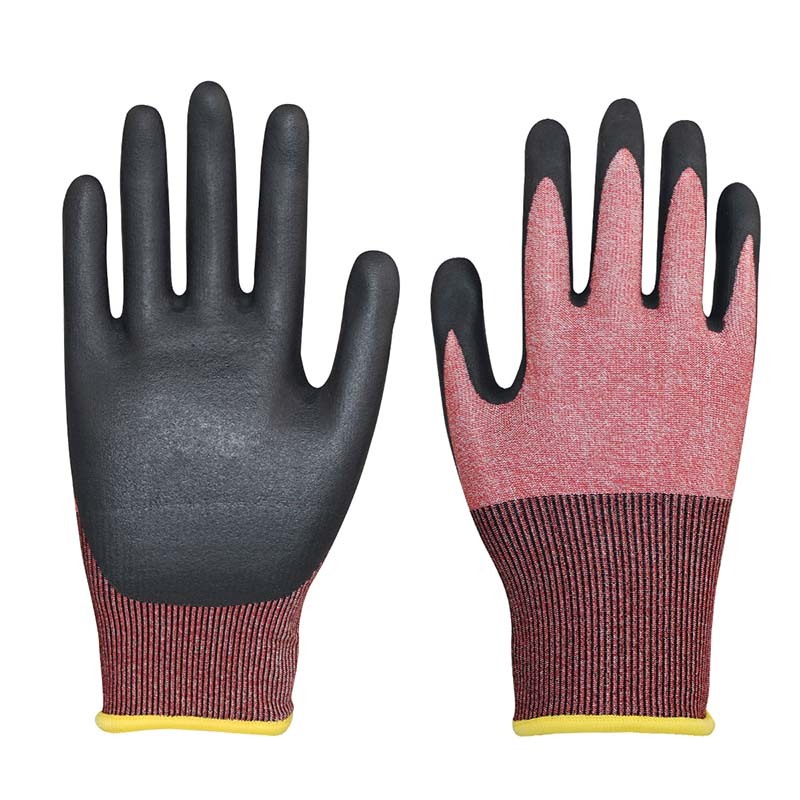
CR1025 18G Foam Nitrile Cut Resistant Gloves
- 18-gauge cut resistant liner with foam nitrile palm coating
- Nitrile coating for grip and abrasion resistance
- Thin enough for handling small parts
- Available with size chart and OEM branding
Cut Levels A1 to A9 Explained
Cut levels A1 to A9 categorize cut resistant gloves based on their ability to withstand cutting forces. Each level indicates a specific range of force, measured in grams, that the glove can resist before being cut through. Understanding these levels helps users select the right gloves for their tasks.
Related: how to fit a safety glove properly.
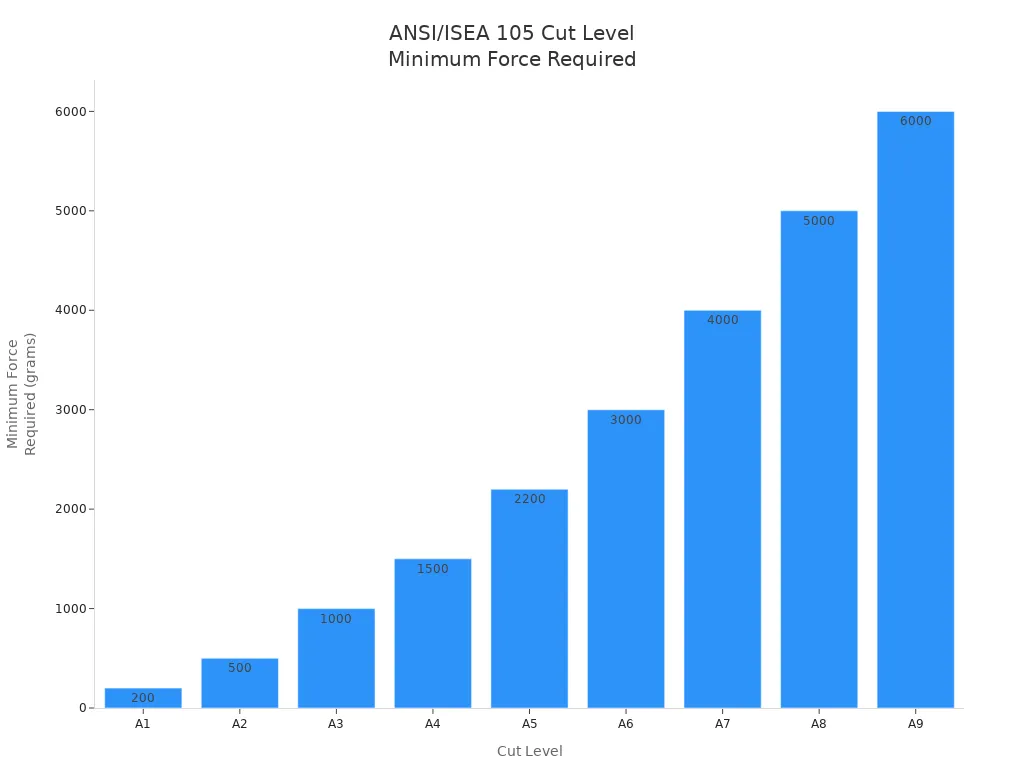
Here’s a breakdown of the force required for each cut level according to the ANSI/ISEA 105 standard:
| Cut Level | Force Required (grams) |
|---|---|
| A1 | 200 - 499 |
| A2 | 500 - 999 |
| A3 | 1000 - 1499 |
| A4 | 1500 - 2199 |
| A5 | 2200 - 2999 |
| A6 | 3000 - 3999 |
| A7 | 4000 - 4999 |
| A8 | 5000 - 5999 |
| A9 | 6000+ |
Recommended Usage for Each Cut Level
Different cut levels suit various applications. Here’s a quick guide to help you understand where each level fits best:
| Cut Level | Weight (Grams) | Recommended Usage |
|---|---|---|
| A1 | ≥200 | Food processing, light assembly |
| A2 | ≥500 | Wire harness assembly, metal stamping |
| A3 | ≥1000 | Automotive manufacturing, construction |
| A4 | ≥1500 | Glass manufacturing, metal fabrication |
| A5 | ≥2200 | Cutting high-risk materials |
| A6 | ≥3000 | Cutting extremely tough materials |
| A7 | ≥4000 | Cutting extremely tough materials |
| A8 | ≥5000 | Cutting advanced composites, plastics |
| A9 | ≥6000 | Extreme environments, cryogenic cutting |
This table shows the recommended usage for each cut level, helping you choose the right cut resistant gloves for your specific needs.
Industry Applications
Cut resistant gloves find applications across various industries. Here’s a look at the common industries associated with each cut level:
| Cut Level | Common Industries/Applications |
|---|---|
| A1 | Light assembly, warehousing, packaging, automotive parts handling |
| A2 | Construction, general manufacturing, metal fabrication |
| A3 | Abattoirs, meat processing, heavy-duty metal stamping |
| A4 | Glass handling, automotive manufacturing |
| A5 | Cutting high-risk materials in various sectors |
| A6 | Specialized applications requiring high durability |
| A7 | Extreme environments needing maximum protection |
| A8 | Advanced composites and plastics handling |
| A9 | Cryogenic cutting and other extreme conditions |
By understanding these levels and their applications, workers can better protect themselves from cuts and injuries in the workplace.
Comparison with EN 388 Levels
Cut levels A1 to A9 also relate to the EN 388 cut resistance levels. Here’s how they compare:
| ANSI Cut Level | EN 388 Cut Level |
|---|---|
| A1 | A |
| A2 | B |
| A3 | C |
| A4 | D |
| A5 | E |
| A6 | F |
| A7 | N/A |
| A8 | N/A |
| A9 | N/A |
This comparison helps users understand how ANSI levels align with European standards, ensuring they make informed choices.
Importance of Choosing Cut Resistant Gloves
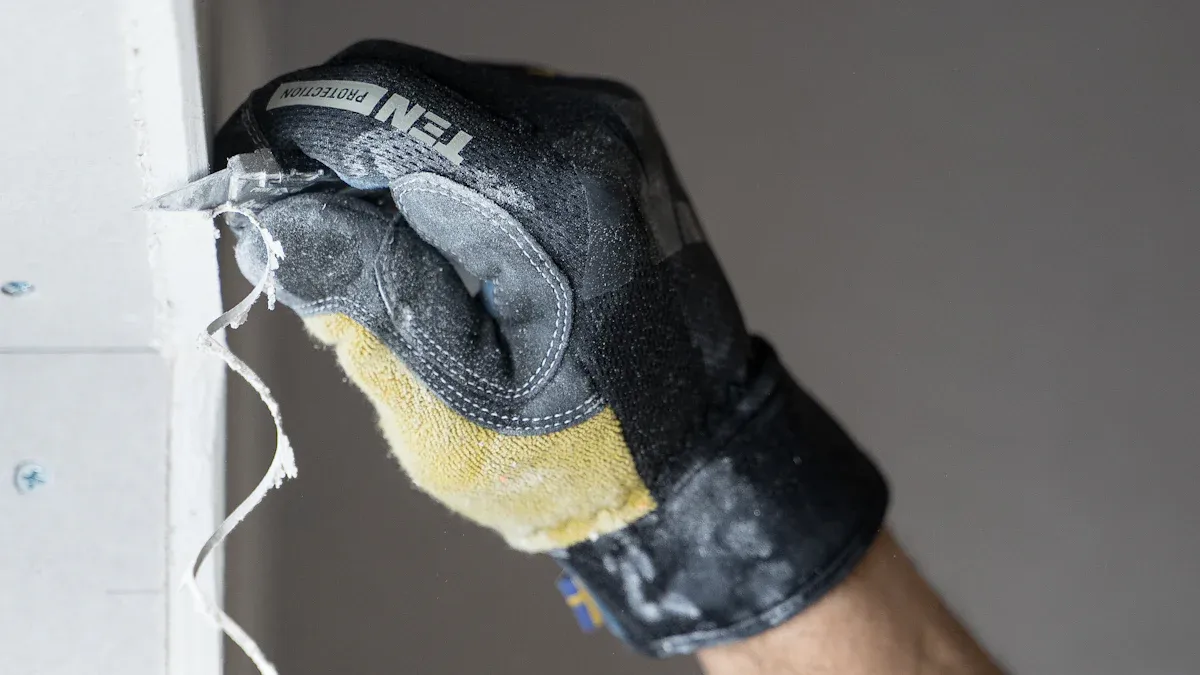
Choosing the right cut resistant gloves is crucial for ensuring safety in various work environments. These gloves protect against cuts and lacerations, which can lead to serious injuries. In high-risk settings, using gloves with insufficient cut resistance can have dire consequences. Workers face a higher likelihood of hand injuries, such as cuts and punctures. This can result in long-term damage, loss of dexterity, and even permanent disability. Additionally, the medical costs and downtime associated with these injuries can be significant, affecting both employees and employers.
Tip: Always assess the cut level needed for your specific tasks to ensure maximum protection.
Cut resistant gloves not only safeguard workers but also contribute to a safer workplace overall. They act as a barrier against injuries, reducing the risk of accidents. Properly designed gloves enhance dexterity and grip, which can improve worker safety and productivity. Studies show that using gloves with good ergonomic features can significantly lower workplace accident rates.
Here’s a quick look at how cut resistant gloves impact workplace safety:
| Evidence Type | Description |
|---|---|
| Protection | Cut-resistant gloves act as a barrier against cuts and lacerations. |
| Ergonomics | Properly designed gloves enhance dexterity and grip. |
| Injury Prevention | Studies indicate that using gloves with ergonomic features lowers accident rates. |
Employers also face financial implications if they do not provide adequate cut resistant gloves. The average hand injury claim exceeds $6,000, while lost-time workers’ compensation claims can reach nearly $7,500. Indirect costs can be up to 20 times the direct costs, including accident investigation expenses and lost productivity. Minor injuries can cost between $500 to $2,000, while serious injuries may exceed $50,000.
By investing in quality cut resistant gloves, employers can reduce the risk of injuries and improve overall workplace morale. Companies that implement these gloves often report a decrease in hand injuries, leading to fewer work stoppages and better compliance with safety regulations.
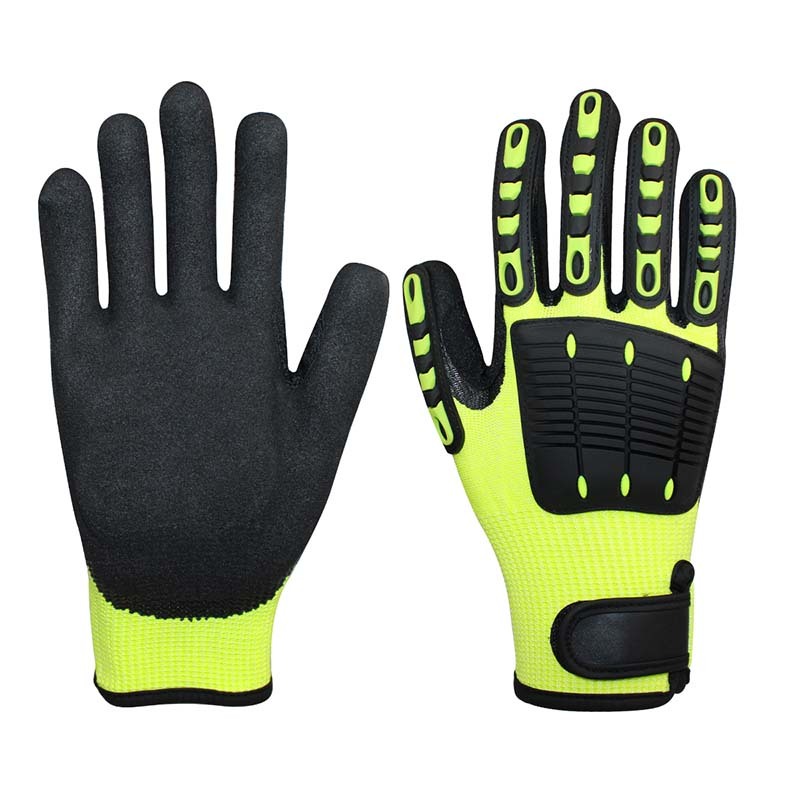
CR115 TPR Impact and Cut Resistant Gloves
- HPPE liner with cut, tear, and abrasion resistance
- TPR impact protection across the back of the hand
- Non-slip, oil-resistant, breathable
- High-visibility colourway
A Note on Safety and Standards
Cut resistance ratings describe how a material performs under a controlled test. They do not predict what will happen with a specific blade, angle, or force in your workplace. Always complete a task-level risk assessment before choosing a glove, follow your site PPE policy, and replace gloves as soon as they show cuts, holes, stiffness, or coating wear. Where a task carries a serious laceration risk, treat the glove as one control among several rather than the whole answer.
Selecting the Right Cut Level for Tasks
Choosing the right cut level for tasks is essential for ensuring safety and efficiency. Workers must consider several factors when selecting cut resistant gloves. Task risk assessments play a crucial role in this process. By identifying hazards and evaluating risks, safety professionals can match gloves to the specific challenges of their work environment. This approach minimizes the risk of injuries while maintaining comfort and dexterity.
Here’s a quick overview of different applications and their recommended cut levels:
| Application | Primary Challenge(s) | Recommended Hardness (HBW) | Recommended Profile | Regional Example |
|---|---|---|---|---|
| Stockpile Loading | Low Impact, Moderate Abrasion | 400-450 | Flat, Reversible | Ports in Korea (loading coal) |
| Site Stripping | High Abrasion, Low Impact | 500+ | Flat, Reversible | Australian construction sites (topsoil) |
| Quarry/Mining | High Impact, High Abrasion | 450-500 (Toughness-focused) | Serrated or Flat with Teeth | African copper mines |
| Road Maintenance | Moderate Impact, Low Abrasion | 400 | Flat, Reversible | Rural roads in Southeast Asia |
| Snow Removal | High Impact (hidden objects) | 400 (Toughness-focused) | Flat, Reversible | Urban areas in Russia |

For tasks that require higher cut levels, such as heavy metal stamping or meat processing, gloves rated A6 to A9 are often necessary. These gloves provide the protection needed in environments with severe cut hazards.
User comfort and dexterity also matter. Thicker gloves may offer better cut protection, but they can hinder movement. Lightweight gloves, like those using Ansell's INTERCEPTTM technology, strike a balance between comfort and safety.
Ultimately, selecting the right cut resistant gloves involves understanding the specific demands of each task. By considering factors like application, comfort, and cut level, workers can ensure they stay safe while performing their jobs effectively.
In summary, cut resistance testing methods have evolved significantly, particularly with the introduction of the ANSI/ISEA standards. These methods now utilize advanced equipment like the Tomodynamometer Test Machine (TDM) to ensure accurate measurements of glove performance.
Cut levels A1 to A9 provide a clear framework for understanding glove protection. Each level corresponds to specific applications and hazards, helping users make informed choices.
Tip: Always select the appropriate cut level for your tasks. This choice is crucial for maintaining safety and preventing injuries in the workplace. By understanding these levels, workers can better protect themselves and enhance overall safety.
A1 to A9 at a Glance
The ANSI/ISEA 105 cut score runs on a continuous scale; the letters group those scores into nine bands. Use the table below as a starting point, then confirm the rating against the test report for the exact model you are buying.
| Level | Cut score band | Where it usually fits |
|---|---|---|
| A1 | 200-499 | Light handling, no sharp edges |
| A2 | 500-999 | General assembly with small parts |
| A3 | 1000-1499 | Handling small sharp components |
| A4 | 1500-2199 | Sheet metal handling, glass, light blades |
| A5 | 2200-2999 | Heavier metal, glass, sustained blade contact |
| A6 | 3000-3999 | High cut exposure, pulp hooks, heavy sheet |
| A7 | 4000-4999 | Very high cut exposure |
| A8 | 5000-5999 | Extreme exposure, meat and glass processing |
| A9 | 6000 and above | Highest band currently classified |
Two tasks with the same material can need different levels. Blade sharpness, applied force, and how long the hand stays in contact all move the requirement. Higher is not automatically better either: thicker, higher-rated liners usually cost more and reduce dexterity, which matters when the task needs fine control.
Sources and References
- ANSI/ISEA 105 - American National Standard for Hand Protection Classification (cut levels A1 to A9): safetyequipment.org
- EN 388 - Protective gloves against mechanical risks (Coupe and TDM test methods): cencenelec.eu
Updated September 29, 2026
0users like this.
