
news
Verifying Raw Materials at a Safety Work Gloves Factory: A Buyer Guide
Quick Answer: Verifying raw materials at a safety gloves factory means asking for documents you can check rather than claims you cannot: a certificate of analysis or mill test report for the specific batch, third-party test results from an accredited lab, audit access to material storage and traceability, disclosure of who supplies the key components, and certification marks that come with verifiable numbers. The two checks that separate a transparent factory from an opaque one are simple - can they name the mill that supplied the yarn, and will they accept a sample sent to an independent lab. Everything else in this guide supports those two questions.
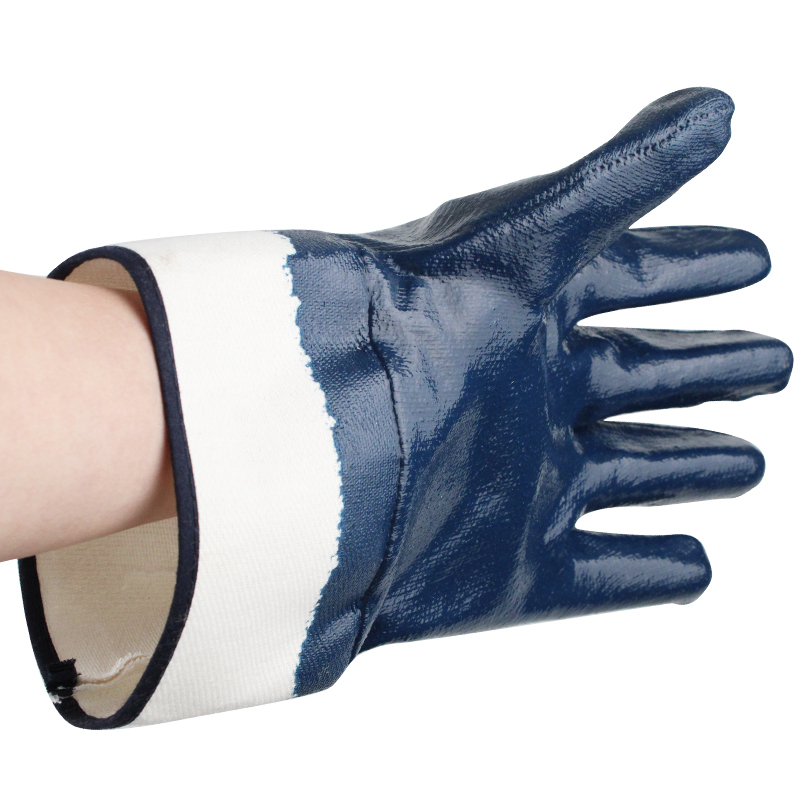
A cut-resistant glove's stated level describes the finished construction, not the yarn inside it. Two gloves can carry the same rating and behave very differently, because the rating depends on the fibre blend, the gauge, the coating and how consistently the mill held all three. That is why material verification is not a formality - it is the only way to know whether the glove you approved is the glove in the carton.
This guide sets out five verification methods, what to look for in each, and how deep to go for a first order versus a long-term supply relationship.
Key Takeaways
- Ask for the batch-specific certificate of analysis or mill test report, not a generic product datasheet.
- Cut resistance is verified against EN388 (A to F) or ANSI/ISEA 105 (A1 to A9); chemical resistance against EN374. Ask which standard was used.
- A factory that will not name its yarn supplier, or refuses independent lab testing, is telling you something.
- Audit access to material storage, batch labelling and incoming inspection records is worth more than any brochure claim.
- Scale verification to risk: full independent testing for a first order, batch sampling and change notification for ongoing supply.
Table of Contents
- Why Raw Material Verification Matters
- Raw Materials Used in Safety Gloves
- Five Verification Methods and What to Check
- Which Test Standard Applies to Which Material
- Red Flags That Mean a Factory Cannot Show Its Work
- How Deep to Verify: First Order vs Long-Term Supply
- Frequently Asked Questions
Why Raw Material Verification Matters
Substandard inputs fail in three ways, and all of them reach the buyer eventually. A glove made with low-grade HPPE or too little para-aramid simply does not reach its stated cut level. A chemical glove built on inferior nitrile degrades early when it meets solvent. And a batch that varies between deliveries means the specification you qualified is not the specification you keep receiving.
The cost of each failure lands differently. A performance shortfall shows up as an injury and a liability question. A degradation problem shows up as a replacement cost. A consistency problem shows up as a quality dispute you cannot win without documentation, which is why the documentation matters as much as the testing.
There is also a compliance dimension. Where gloves are supplied into regulated industries, the buyer usually has to demonstrate that the protective equipment was specified and verified, not merely purchased. A documented material verification trail is what makes that demonstration possible.
Raw Materials Used in Safety Gloves
To verify a material you first need to know what it is supposed to do. These are the inputs that determine a glove's protective performance.
HPPE
High-performance polyethylene is the workhorse liner for cut-resistant gloves. It is light, comfortable and achieves good cut resistance at a workable gauge. Verification centres on the fibre grade and the blend ratio - a glove sold as HPPE-lined can contain very different fibre quality between mills, and the difference does not show in a photograph.
Para-aramid
Para-aramid fibres provide high cut resistance together with heat resistance and no melting point. They are used where heat and cut hazards combine. Verification should confirm the fibre type and check for UV degradation history, because para-aramid loses strength with prolonged sunlight exposure during storage.
Steel and Glass Fibre
Stainless steel fibre and glass fibre raise cut resistance at lower gauge. Where either is claimed, ask for the blend percentage and the tested cut level on the finished glove - the ANSI A7 HPPE cut-resistant gloves in our range illustrate how far a high HPPE content can be pushed. Steel fibre adds weight and can trigger metal detectors, which rules it out in some food and electronics applications. Glass fibre is lighter but more brittle. Where either is claimed, ask for the blend percentage, not just the fibre name.
Coatings and TPR
Nitrile, latex and polyurethane coatings provide grip, abrasion and chemical resistance. TPR provides impact protection on the back of the hand. Where impact is the co-dominant hazard, the impact gloves range is specified separately from the cut rating. Coatings are verified by thickness, adhesion and the relevant chemical test, and they are the most common place where a substitution happens - a thinner coating than the approved sample is difficult to see and easy to pass.
Five Verification Methods and What to Check
Each method below is worth doing, but each is only as useful as the detail you ask for. The pattern is the same throughout: do not accept that a document exists, read what is on it.
1. Certifications and Certificates of Analysis
A certificate of analysis or mill test report should describe the specific batch you are buying, not the product line in general. What to check on the document:
- A batch or lot number that appears on the report and on the material packaging
- The test date and the issuing lab, with the lab's accreditation scope visible
- The measured values, not just a pass statement - composition, mechanical properties and the standard tested against
- Whether the report covers the raw material, the finished glove, or both. A yarn report says nothing about the finished construction.
Third-party test reports from accredited laboratories such as SGS or CTC carry more weight than a factory's own lab, because the accreditation is externally audited. Either is acceptable as long as the lab's scope covers the test claimed.
2. Independent Lab Testing
Sending samples to a lab you chose is the single most conclusive check, because it removes the factory from the chain of custody. The tests that matter depend on the claim being verified:
- Cut resistance - test to EN388 (A to F) or ANSI/ISEA 105 (A1 to A9), whichever the factory claimed.
- Chemical resistance - permeation and degradation testing to EN374.
- Abrasion, tear and puncture - the remaining EN388 mechanical ratings.
- Impact - the EN388 impact rating where TPR protection is claimed.
Compare the results against the factory's own claim for the same model. A discrepancy is not automatically fraud - different labs and sample preparation can vary - but a large gap is a question that needs answering before the order proceeds.
3. Factory Audit and On-Site Inspection
An audit is where documentation and practice either match or do not. Four areas are worth the time:
- Material storage. Are rolls and yarn stored away from moisture, direct UV and contamination? Para-aramid left in sunlight degrades, and a warehouse that shows it tells you something about the process control.
- Batch labelling and traceability. Pick a finished glove at random and ask the factory to trace it back to the raw material batch. If that takes more than a few minutes, traceability is nominal rather than real.
- Incoming inspection records. Ask to see records of rejected material. A factory with no rejection records either has perfect suppliers or no inspection - and the second is far more common.
- Quality system. ISO 9001 certification is a reasonable baseline for process control, but ask to see the audit trail, not the certificate alone.
4. Supplier Disclosure
A transparent factory will tell you who supplies its key inputs, at least by mill name and region. This is not about demanding their supplier list - it is about establishing whether the factory has a real relationship with a named mill or buys opportunistically through traders. Ask which mill supplies the HPPE, whether that mill is audited, and whether the factory holds a long-term agreement. Vague answers here are usually the most informative part of the conversation.
5. Certification Marks on Finished Product
Finished gloves carry marks such as CE (EU) or ANSI (US), and these require the manufacturer to hold a documented quality system and to have completed initial type testing. Treat the mark as a starting point rather than proof: ask for the certificate number behind it and verify it against the issuing body's register. Our overview of the cut-resistant gloves range shows how certification is presented alongside product specifications.
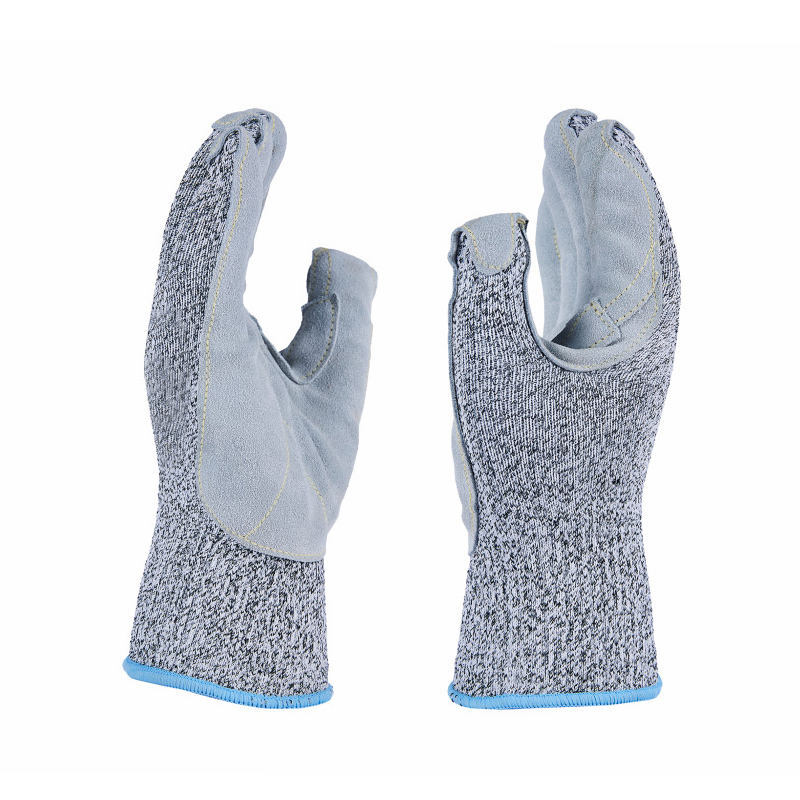
S1087T Level 5 Cut Resistant Impact Gloves
- 13-gauge HPPE and glass fibre shell with TPR impact protection
- Sandy nitrile palm coating for grip in oily environments
- Batch test reports available on request for material and construction verification
Which Test Standard Applies to Which Material
| Material or Feature | Relevant Standard | What the Test Establishes |
|---|---|---|
| HPPE, para-aramid, steel or glass fibre liner | EN388 (A to F) or ANSI/ISEA 105 (A1 to A9) | Cut resistance of the finished construction |
| Steel fibre content | EN388 cut rating plus composition declaration | Blend percentage and whether it matches the claim |
| Nitrile, latex or polyurethane coating | EN374 (chemical permeation and degradation) | Resistance to specified chemicals and coating integrity |
| Coating thickness and adhesion | Manufacturer specification plus visual and abrasion check | Whether the coating matches the approved sample |
| TPR impact protection | EN388 impact rating (P) | Transmitted impact force on the knuckles |
| General process control | ISO 9001 | That the factory follows its own documented procedures |
| Abrasion, tear, puncture | EN388 mechanical ratings (A, B, C, D) | Durability of the shell under mechanical wear |
The point of this table is to stop the most common verification error: testing for the wrong property. A factory asked to "prove the material" may return a yarn tensile report, which says nothing about the cut level of the finished glove. For a deeper explanation of how the cut tests themselves work, see our guide on how cut levels are tested and the note on EN388 level 5 heat and cut resistant gloves.
Red Flags That Mean a Factory Cannot Show Its Work
These are the answers that should slow an order down. None of them proves a problem on its own, but each one means the verification trail is incomplete.
- A logo instead of a number. Certification marks shown as images on a brochure, with no certificate number or licence code available on request.
- A CoA with no batch number. A certificate that cannot be tied to a specific lot cannot verify a specific delivery.
- No named raw material supplier. Refusal to identify the mill, even by name and region, usually means the supply chain runs through traders and is not traceable to a mill.
- Sample and bulk treated as interchangeable. If the factory will not confirm that the production batch uses the same material as the approved sample, the sample has verified nothing.
- Resistance to independent testing. A factory confident in its material should welcome a sample going to a lab you chose. Reluctance here is the strongest single signal.
- Rejection records that do not exist. A material inspection process with no history of rejected batches is usually a process that does not run.
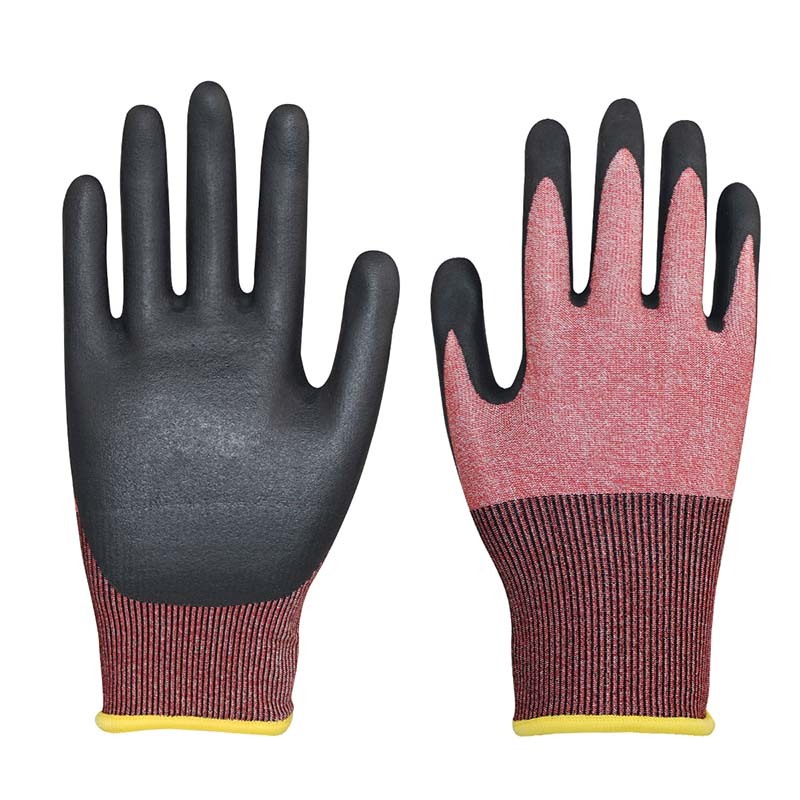
CR1025 18G Foam Nitrile Cut Resistant Gloves
- Thin 18-gauge HPPE shell suited to fine assembly and inspection
- Foam nitrile palm coating with consistent adhesion across batches
- Supplied with batch documentation for material and construction verification
How Deep to Verify: First Order vs Long-Term Supply
Verification should scale with exposure. Doing everything on every order is expensive; doing nothing on the first order is worse.
For a First Order
- Request the batch-specific CoA or mill test report before production begins, not after shipment.
- Send a sample to an independent lab for the test that matches your primary claim - usually cut resistance.
- Conduct an audit, or a documented video walkthrough covering storage, labelling and incoming inspection if travel is not possible.
- Confirm in writing that the production batch uses the same material as the approved sample.
For Ongoing Supply
- Move to batch sampling: retain a sample from each delivery and test periodically rather than every time.
- Agree a change notification clause - any change of mill, fibre blend or coating requires written notice before production.
- Schedule an annual audit, plus an unannounced spot check if the volume justifies it.
- Keep a retained sample library so a disputed delivery can be compared against what was approved.
Frequently Asked Questions
What should a certificate of analysis for gloves contain?
A batch or lot number, the test date, the issuing laboratory and its accreditation scope, the measured values rather than a bare pass statement, and a clear indication of whether it covers the raw material, the finished glove or both.
What counts as a red flag during supplier verification?
Certification shown as a logo without a number, a CoA with no batch number, refusal to name the yarn supplier, no confirmation that bulk matches the approved sample, and reluctance to accept independent lab testing.
How much verification is enough for a first order?
At minimum: a batch-specific CoA, one independent lab test on your primary claim, and written confirmation that production material matches the approved sample. An audit or documented video walkthrough is worth adding if the volume justifies it.
Who pays for independent sample testing?
Usually the buyer, because the buyer chooses the lab. It is a small cost against the exposure of a mis-specified PPE order, and a factory that refuses to ship a test sample is itself a signal.
How do I check whether a certification is genuine?
Ask for the certificate number and licence code, then verify both against the issuing body's public register. A mark printed on a glove or a brochure is not evidence on its own.
What should be re-tested when changing suppliers?
Cut resistance to the standard the previous supplier used, coating adhesion and thickness, and the glove's sizing consistency. Retain samples from both suppliers so a disputed delivery can be compared.
Can a trading company pass these checks?
Some can, but the material traceability questions usually cannot be answered. If a supplier cannot name the producing factory or obtain a batch-specific CoA from it, the verification trail stops at the trading company.
How long should batch records be retained?
For as long as the product could be in service plus the warranty period. Many buyers retain samples and documentation for the full life of the product line, so a claim raised two years later can still be evidenced.
Verifying raw materials at a safety gloves factory comes down to asking for things that can be checked: a batch-specific certificate, a third-party result, audit access to storage and traceability, a named supplier, and certification numbers that resolve against a public register. A factory that can produce all five is showing you its process; one that cannot is asking you to take its word for it.
Start with the two cheapest checks - request the batch CoA and send one sample to a lab you chose. If both come back clean and the factory is comfortable with them, you have most of the assurance you need for a first order. Build from there as volume grows.
About This Guide
This guide is written for procurement teams, supply chain managers and safety professionals evaluating protective glove suppliers. It describes verification methods generally and does not certify any specific factory, product or certificate - always verify claims against the issuing body's own register for the batch you are buying. Nothing here substitutes for an on-site audit where the volume or risk justifies one.
Sources and References
- Occupational Safety and Health Administration (regulatory context for employer duties on hand protection and PPE selection).
- PubMed Central - review of hand injury burden and glove effectiveness (peer-reviewed evidence underpinning why protective equipment specification and verification matter).
0users like this.
