
news
13-Gauge Cut Resistant Gloves: Gauge, Cut Levels and How to Choose
Quick Answer: "13-gauge" describes how many knitting needles per inch are used to build the glove shell, so a 13-gauge glove sits in the middle range: finer than a 7 or 10-gauge liner, coarser than an 18-gauge one. That makes it a good compromise between cut protection and dexterity for general handling, assembly and light metal work. The cut level itself does not come from the gauge, it comes from the yarn (HPPE, aramid, steel or glass fibre blends) and is measured under EN388 or ANSI/ISEA 105. For fine, precise work, a finer gauge usually feels better; for rough, high-abrasion handling, a coarser gauge lasts longer.
Key Takeaways
- Gauge is a knitting specification, not a protection rating. Protection comes from the yarn blend and the tested cut level.
- 13-gauge gloves are a practical middle ground: enough dexterity for handling tasks, enough coverage for general industrial cut risk.
- Cut resistance is measured to EN388 (letters A–F under the newer TDM test), ANSI/ISEA 105 (levels A1–A9 in grams) and GB 24541 in China.
- Liners do the cutting work: HPPE (UHMWPE), aramid, steel and glass fibre, often blended to balance comfort and level.
- Coatings do the gripping work: nitrile for oily parts, polyurethane for dry precision handling, latex for general grip.
- Specify the application first, then the level, then the gauge and coating. Buying by gauge alone is how over-spec and under-spec orders both happen.
Table of Contents
- What "13-Gauge" Actually Means
- Cut Levels Explained: EN388, ANSI/ISEA 105 and GB 24541
- Materials and Coatings That Deliver Cut Resistance
- Matching a Glove to Your Application
- Customization, MOQ and Sampling
- Inspection and Care
- Frequently Asked Questions
Supplier and Product Snapshot
The table below is our standard product and supplier reference. It is the same information our sales team works from when quoting, and it answers most of the questions buyers ask before a first order.
| Type | industrial safety gloves |
| Industry experience | 15+years |
| Company Name | SIZA GLOVES |
| Place of Origin | Changzhou,Jiangsu |
| OEM/ODM | Support |
| Function | protection |
| Product Features | Comfort,Abrasion resistance,Dexterity,High-temperature protection,Impact protection,Low-temperature protection... |
| Certificate | EN388,GB 24541,ANSI... |
| Application | Petrochemicals,Food Processing,Machining,Mining and Metallurgy...etc |
| LOGO | Accept Customized |
| Payment | Visa,paypal,T/T,Google Play...etc |
| Material | Leather,Nitrile rubber,Natural latex,PVC... |
| Product Size | It depends on the specific product or customization |
| Nearby ports | Changzhou,Shanghai... |
| Transportation | ARAMEX,EMS,UPS,DHL,TNT...etc |
| Packing Size | 93 * 29 * 95 According to container size, standard export package |
| Thickness | Medium |
| Selling Units | Single item |
| Color | Yellow,Grey,Silver... or according to customer requirements |
| Sample | Freely |
| Trading Country | Europe,Southeast asia,North america,South america,Korea,Argentina,Germany,Australia,Poland... |
| After-sales Service | Online support |
| PROPER CARE AND INSPECTION | Inspect before each use for cracks, holes, peeling coating, or liner tears. |
Please note: The above table data is for reference only. For specific information, please contact us.
What "13-Gauge" Actually Means
Gauge counts the needles per inch on the knitting machine. A 13-gauge shell is knitted from thirteen needles per inch, which produces a medium-density fabric. Lower numbers mean fewer, thicker yarns; higher numbers mean more, finer yarns.
A simple way to think about it is that gauge trades cushioning for feel. A 7-gauge or 10-gauge liner is thicker, cushions impact and abrasion better, and holds up longer in rough handling, but it feels clumsy when you pick up small parts. An 18-gauge liner is thin and close-fitting, which is why it is common in electronics assembly and precision work, but the shell itself gives less padding.
Here is the important part: gauge does not set the cut level. Two gloves knitted at 13 gauge can sit at completely different cut ratings, because the rating comes from the yarn blend inside the shell and from how the glove performs in a cut test. A 13-gauge glove with an HPPE and steel blend can reach a high cut level; a 13-gauge glove in plain cotton cannot reach any meaningful cut level at all.
Cut Levels Explained: EN388, ANSI/ISEA 105 and GB 24541
Three standards come up most often in industrial purchasing, and they do not use the same scale, which is where a lot of confusion starts.
| Standard | How cut resistance is expressed | What to know when specifying |
|---|---|---|
| EN388:2016 (Europe) | Letters A–F from the TDM test, alongside the older Coupe test score | Higher letters mean higher cut resistance; abrasion, tear and puncture are rated separately on the same label |
| ANSI/ISEA 105 (North America) | Levels A1–A9, with increasing gram loads on the cut test | A6 and above generally means a substantial liner; the level is per glove, not per brand |
| GB 24541 (China) | Domestic standard for protective gloves against mechanical risks | Useful when the end user or tender specifies a Chinese standard |
The practical point is that a "cut level" is a test result for a specific glove construction, not a property of the material name. If a tender or a safety assessment names a level, always confirm it against that glove's own test documentation rather than assuming two similar-looking gloves share a rating.
For context on how PPE is regulated and selected, the US OSHA overview of personal protective equipment explains the employer's assessment duty, and the CCOHS guide to protective gloves covers how to match a glove to a hazard.
Materials and Coatings That Deliver Cut Resistance
The liner decides how much cut resistance a glove can deliver. The coating decides whether the wearer can hold onto the part while they do it.
Liner materials
- HPPE (UHMWPE) — high-strength polyethylene fibre, the most common base for mid to high cut levels, light and comfortable.
- Aramid — also heat resistant, useful where hot parts or sparks are present.
- Steel or glass fibre blends — blended into the knit to raise the cut level further, at some cost to flexibility.
- Nylon and spandex — rarely cut-resistant on their own, but they improve fit, stretch and comfort, which is why they are blended into working shells.
Blending is normal, and it is how manufacturers balance a target level against breathability, weight and price. A single-fibre glove usually trades off one of those three.
Coatings
- Nitrile — oil and grease resistance with a firm grip; the standard choice for machining and oily parts.
- Polyurethane (PU) — thin and sensitive, best for dry precision handling where feel matters most.
- Latex — flexible general-purpose grip; the coating pattern matters as much as the material.
Coating coverage also varies: palm-coated, three-quarter dipped and fully dipped gloves behave differently in wet or oily conditions. If you are specifying for a specific line, describe the hazard and the part, not just the glove name.
Matching a Glove to Your Application
Start from the hazard, not the catalogue. The table below maps typical industrial settings to the properties that matter most — the final level should always be confirmed against the glove's own test data and your risk assessment.
| Application | Typical risk | Properties to prioritise |
|---|---|---|
| Precision assembly and small parts | Minor cuts, sharp edges | Finer gauge, PU coating, high dexterity |
| Machining and metal parts handling | Cut risk with oil and swarf | HPPE or HPPE blend liner, nitrile coating |
| Petrochemicals and maintenance | Cut plus chemical contact | Cut-resistant liner plus a chemical-resistant barrier where required |
| Food processing | Blade and cut risk, wet grip | Cut-resistant liner with a food-contact suitable coating |
| Mining, metallurgy, sheet metal | High cut and abrasion, heat | Higher cut level, aramid or steel blend, reinforced coating |
Two specification mistakes are common. The first is over-specifying: buying the highest level available everywhere, which costs more and reduces dexterity, so workers remove the gloves to do the task and the protection disappears. The second is buying by gauge alone, which ignores the yarn blend that actually sets the level.
If you want a worked example of a finer-gauge glove for precision handling, this note on 13-gauge cut resistant gloves for precision handling goes into the trade-off in more detail. For the distinction that often decides a purchase, the explainer on puncture resistance versus cut resistance is worth reading before you write a specification.
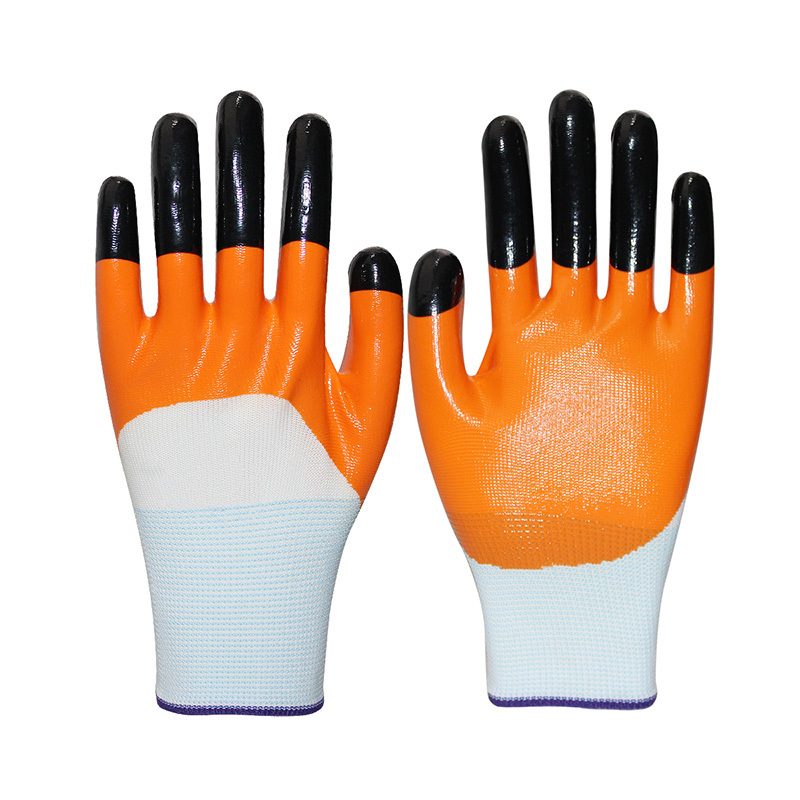
GN3207 Yellow Elastic Cuff Nitrile Coated Polyester Gloves
- Nitrile coating for firm grip on oily and slightly wet parts
- Polyester knit shell with elastic cuff for a close, comfortable fit
- Straightforward general handling glove, available in custom colours and logo options
Customization, MOQ and Sampling
Most industrial glove purchases are not off-the-shelf, and the customization conversation is usually where a specification becomes an order.
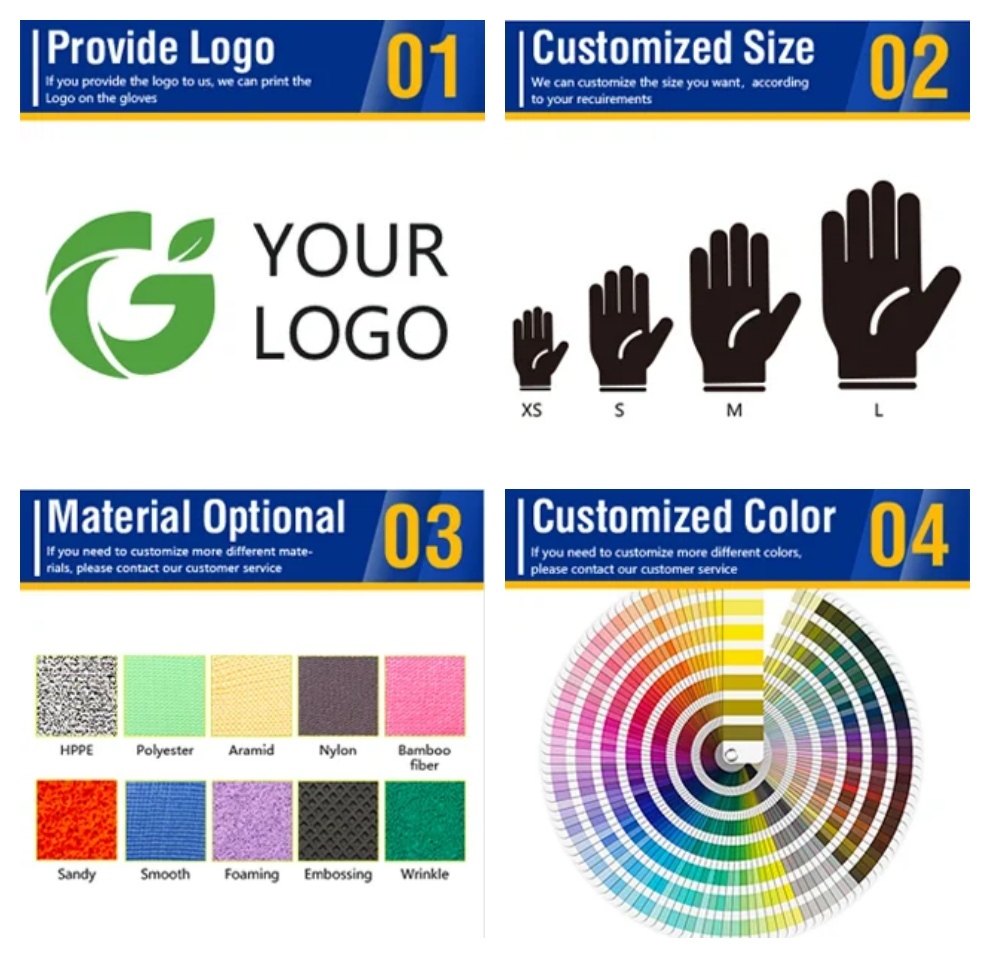
- Logo and branding — printed or knitted branding is normally accepted, subject to artwork review.
- Colours — standard colourways plus custom colours on request, which is often how buyers distinguish sizes or departments on site.
- Materials and coatings — leather, nitrile rubber, natural latex and PVC options depending on the application.
- Packaging — standard export packing with carton sizes adjusted to container loading.
- Samples — free samples are offered for evaluation before a bulk order, which is the sensible way to test fit and grip before committing.
- Lead time and shipping — production runs from Changzhou, with Shanghai and Changzhou as the usual ports of departure and international courier or freight forwarding to Europe, Southeast Asia, North America, South America and Australia.
When you request a quote, send five things: the application, the required cut level and standard, the coating and grip requirement, the sizes and estimated quantity, and any branding or packaging requirement. Orders with those five points move through sampling far faster than a request for "cut resistant gloves" alone.
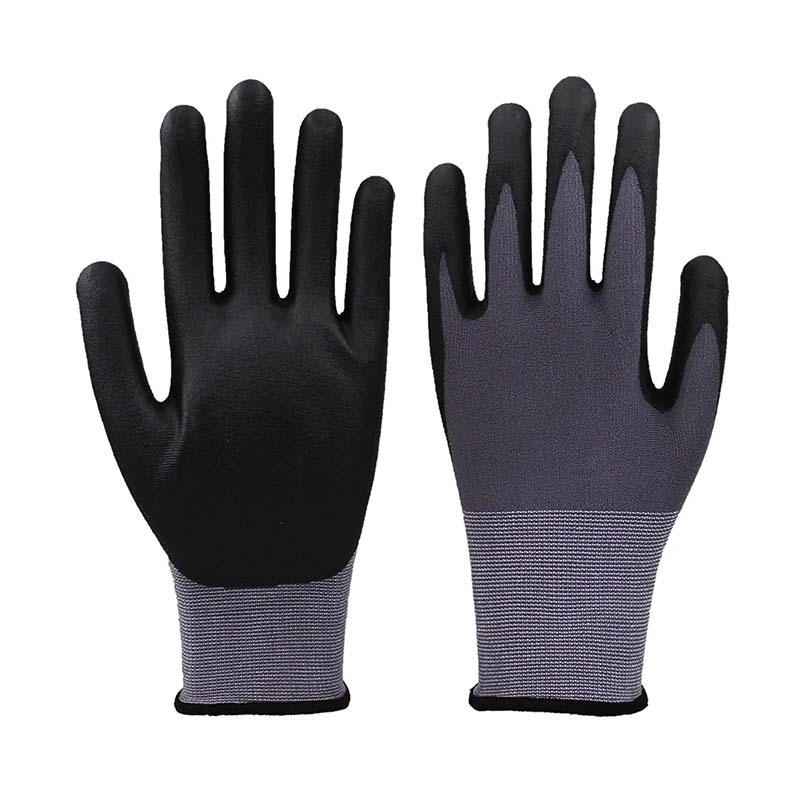
S1173NTS 15G Foam Nitrile Coated Nylon Spandex Touch Screen Gloves
- 15-gauge knit: finer than a 13-gauge shell, so more feel for small parts
- Foam nitrile coating for grip with a lighter touch than a solid dip
- Touchscreen compatible, which matters for handheld scanners and terminals
Inspection and Care
Cut resistance is a property of an intact glove, and a glove with a damaged coating or a torn liner is not the glove that was tested.
- Inspect before each use for cracks, holes, peeling coating, or tears in the liner.
- Check the fingertips and the knife-edge areas first, because that is where coatings fail earliest.
- Replace the glove when the coating peels or the liner tears, rather than continuing with reduced protection.
- Follow the manufacturer's laundering guidance if gloves are reused, and never machine-dry a coated glove at high heat.
- Store gloves dry and out of direct sunlight, in their original packaging if they will be stored for a long period.
If you are specifying for a regulated workplace, your risk assessment and the glove's own test documentation take priority over any general guidance like this.
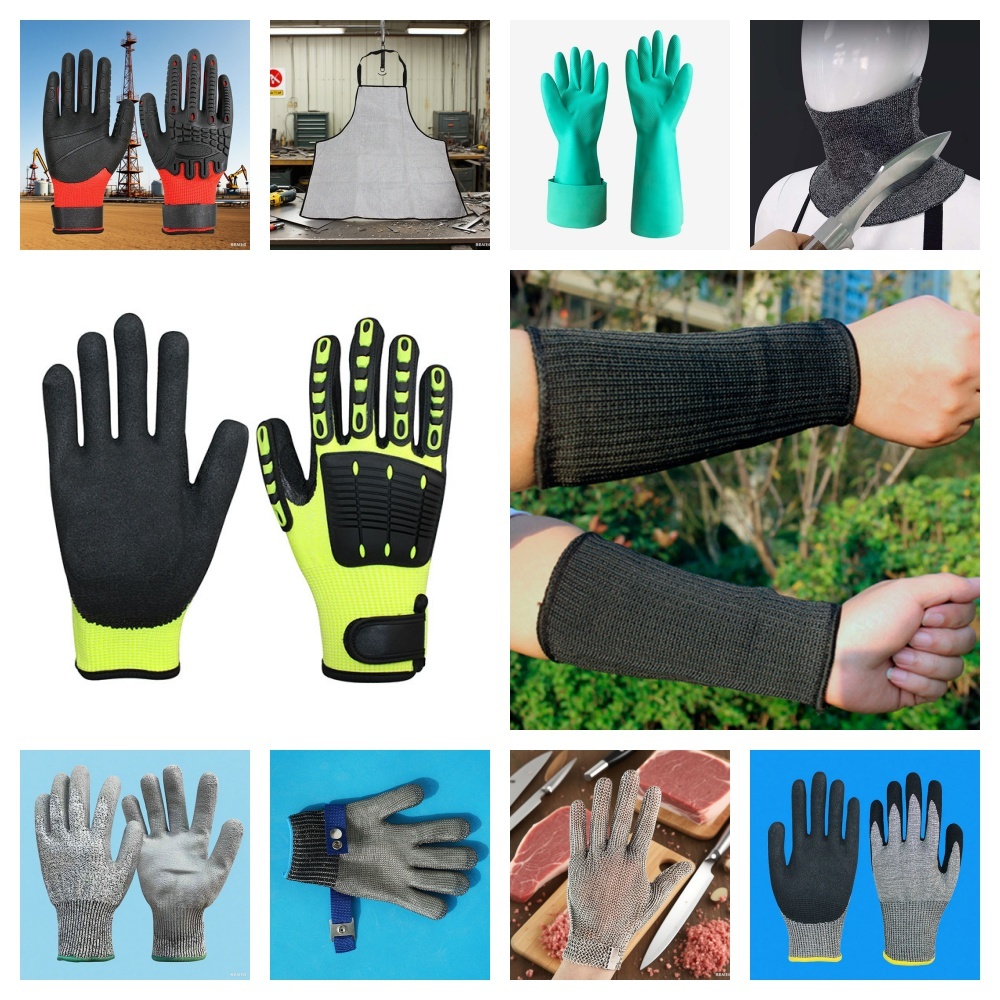
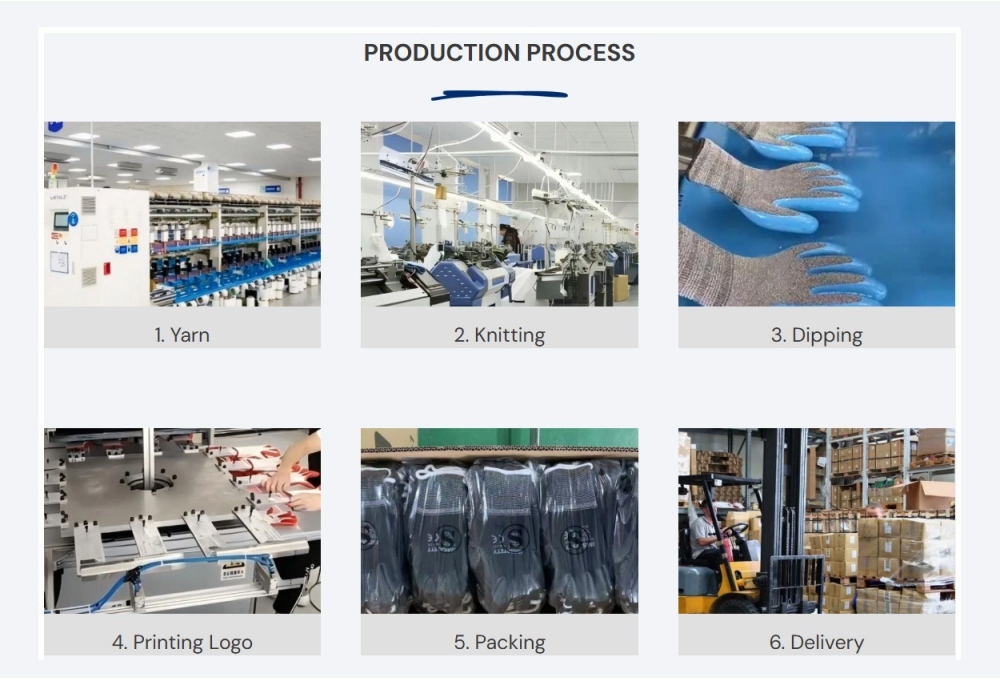
Factory, Products and Service Gallery
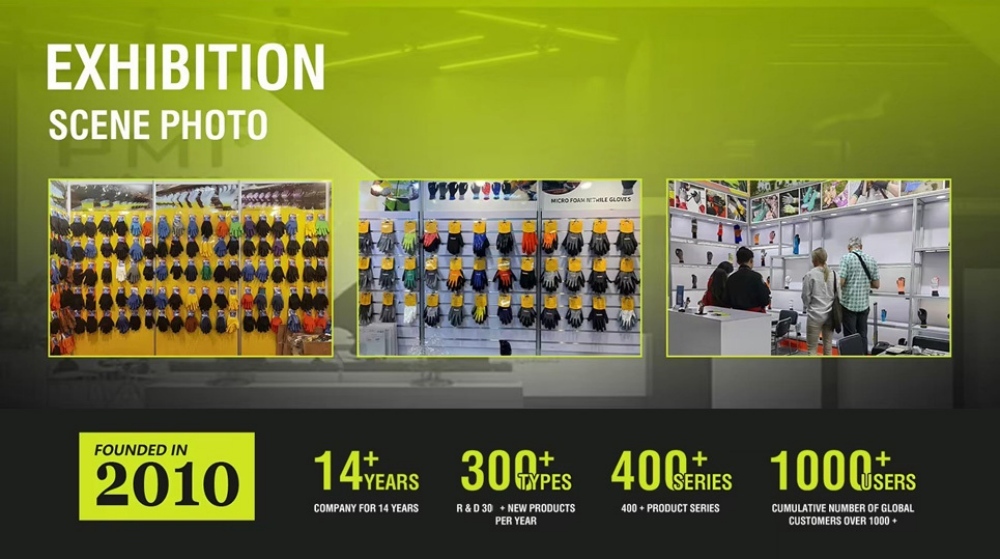
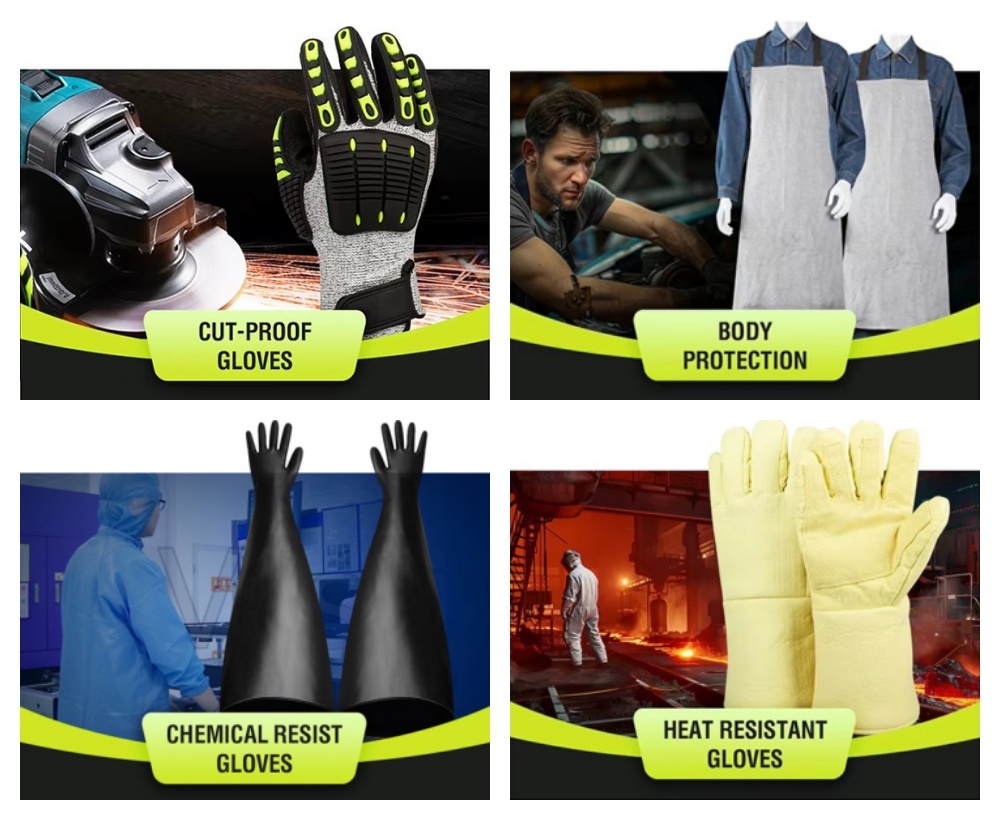
These photos come from our own production and exhibition material, so you can see the products, the manufacturing process and the OEM service side of the business before you order.
Frequently Asked Questions
Does a 13-gauge glove mean it is cut resistant?
No. Gauge describes the knit density, not the protection level. A 13-gauge glove can reach a high cut level if the yarn includes HPPE, aramid, steel or glass fibre, or it can offer almost no cut resistance if it is knitted from plain cotton. Always check the tested cut level for the specific glove.
What cut level should I specify?
It depends on the hazard, not on a preference for higher numbers. Light handling with occasional sharp edges usually calls for a lower level; sheet metal, glass handling or heavy cutting calls for a high level. Over-specifying reduces dexterity, and workers who cannot feel the part tend to remove the glove, which removes the protection.
What is the difference between 13-gauge and 18-gauge?
18-gauge is knitted from finer yarns at higher density, so it feels thinner and closer to the skin, which suits precision assembly. 13-gauge is denser and slightly thicker, so it cushions more and tends to last longer in rougher handling. The right choice depends on whether you prioritise feel or durability.
Which coating is best for oily parts?
Nitrile is the usual answer for oily and greasy parts because it resists oil and keeps a firm grip. Polyurethane is better for dry precision work, and latex gives flexible general grip. Coating coverage, such as palm dipped versus fully dipped, changes the result as much as the material does.
Do you offer custom branding and colours?
Yes. Logo customization is supported, and colours can follow customer requirements, which is commonly used to separate sizes or departments. Materials, coatings and export packaging can also be specified, and free samples are available for evaluation before a bulk order.
How do I know a claimed cut level is real?
Ask for the test documentation for that specific glove construction. Cut levels are results of EN388, ANSI/ISEA 105 or GB 24541 testing on a particular glove, and two visually similar gloves from different constructions can carry different ratings. Treat the certificate as the only proof of the level.
Conclusion
Gauge is worth understanding, but it is not the specification you buy on. Start with the hazard, choose the cut level and standard that match it, then decide the liner, the coating and the gauge that let the wearer keep the glove on for the whole shift.
If you are sourcing for the first time, test fit and grip with samples before committing, and send a specification that names the application, the level and the quantities. That is what turns a catalogue enquiry into a workable order.
Browse the cut resistant gloves collection for current options, or ask for a sample in the configuration you need.
This article is general technical information for industrial buyers and is not a substitute for a workplace risk assessment. Protective levels always refer to the tested performance of a specific glove model; confirm levels with the product's own test documentation before use.
0users like this.
